How to Know If Your Furnace Is Gas or Electric
The most reliable way to know if your furnace is gas or electric is to confirm its model in the manufacturer’s literature. An exterior gas connection and combustion exhaust are useful clues for a gas furnace. An electrical connection alone proves little: gas furnaces also use electricity.
Before requesting heating work in San Angelo, it helps to know what equipment you have. A closed metal cabinet can contain a gas furnace, an electric furnace or an air handler connected to a heat pump. You do not need to open the cabinet or run a test to start identifying it.
1. Start with paperwork and model information
Check your installation invoice, owner’s manual or previous service report. Look for the full model number and words such as natural gas, propane, electric heat or heat pump. Search the manufacturer’s official product literature for that exact model, including its suffix.
If a rating plate is safely visible on the outside, photograph it for reference. Some plates are behind access panels. Leave those panels closed for this identification exercise and ask a technician to read the plate if necessary. Do not climb into an unsafe attic or crawlspace to find a label.
Carrier’s furnace buying guide discusses rating plates and fuel sources. Location and layout differ by model; use the manual for your actual unit rather than assuming every furnace matches an online photograph.
2. Compare exterior clues without touching connections
| Clue | What it suggests | What it does not prove |
|---|---|---|
| Gas supply pipe entering the heating cabinet | A gas-burning appliance | That a nearby pipe serves this unit, or whether it uses natural gas or propane |
| Combustion exhaust connected to the furnace | A fuel-burning furnace | That any pipe in the closet belongs to the heating system |
| Electrical wiring or a breaker marked furnace | The equipment uses electricity | That electricity is its main heating source |
| Outdoor unit with heat-pump model documentation | A heat-pump system | Whether indoor backup heat is electric or gas |
A gas furnace may use a metal exhaust vent or, on some condensing models, plastic venting. Do not identify equipment by pipe material alone. Water heaters and other appliances may share the utility area. Trace nothing that requires moving equipment, removing a cover or handling a valve.
The Department of Energy’s explanation of direct-vent heating equipment describes how some combustion appliances bring air in and exhaust gases outdoors. Venting is a clue to verify against the model, not a homeowner inspection of vent safety.
3. Avoid three common identification mistakes
“It has a power cord, so it must be electric heat.”
A gas furnace still needs electrical power for controls, ignition and air movement. An outage can therefore stop a gas furnace. The Department of Energy’s consumer furnace overview distinguishes electric equipment from equipment using electricity together with a fuel.
“The thermostat says Heat and Cool, so I know the fuel.”
Those settings describe operating modes. Different equipment types can use the same labels. Do not remove thermostat wiring or change installer settings to investigate fuel type. A configuration mistake can create a separate problem.
“There is no visible flame, so it cannot be gas.”
A flame is not visible on every closed furnace, and many models use electronic ignition rather than a continuously burning pilot. Sound, appearance and the absence of a viewing window are not reliable standalone tests.
4. Check whether you have a heat pump or dual-fuel system
An electric furnace generates heat with resistance elements. A heat pump moves heat and may work with an indoor air handler and electric backup. A dual-fuel system can pair a heat pump with a gas furnace. Confirm both indoor and outdoor model numbers before describing the setup.
If the model documentation identifies a heat pump, our heat-pump troubleshooting and service guide is the relevant next stop. A wall-mounted indoor head may belong to a ductless heating and cooling system, rather than a conventional furnace.
5. What to send when requesting service
Prepare the model and serial numbers if accessible, a photo of the closed equipment, your thermostat display and a brief symptom description. Mention whether the problem affects heating only, cooling only or both. Renters can ask the property manager for equipment records rather than opening unfamiliar machinery.
Once the system is identified, request the appropriate assessment. For a conventional furnace that will not heat, start with our furnace service information. For an upgrade, compare the scope of heater replacement in San Angelo after a professional confirms the existing fuel, electrical supply and distribution system.
Frequently asked questions
Is forced-air heating gas or electric?
Either is possible. “Forced air” describes how heated air is distributed through ducts, not the fuel. Model documentation is the better starting point.
Does a gas furnace use electricity?
Yes. Electricity typically operates its controls and blower, and often ignition. That electrical supply does not make it an electric-resistance furnace.
Can a gas bill tell me which furnace I have?
It is a clue, not confirmation. The gas may supply a water heater or another appliance. Match equipment records to your actual heating system.
Still unsure what heats your home?
Call 877-651-9143 to request heating service. Describe the accessible model information and symptoms. Confirm provider identity, service availability and diagnostic pricing before scheduling. See the San Angelo and Concho Valley coverage guide for nearby locations.
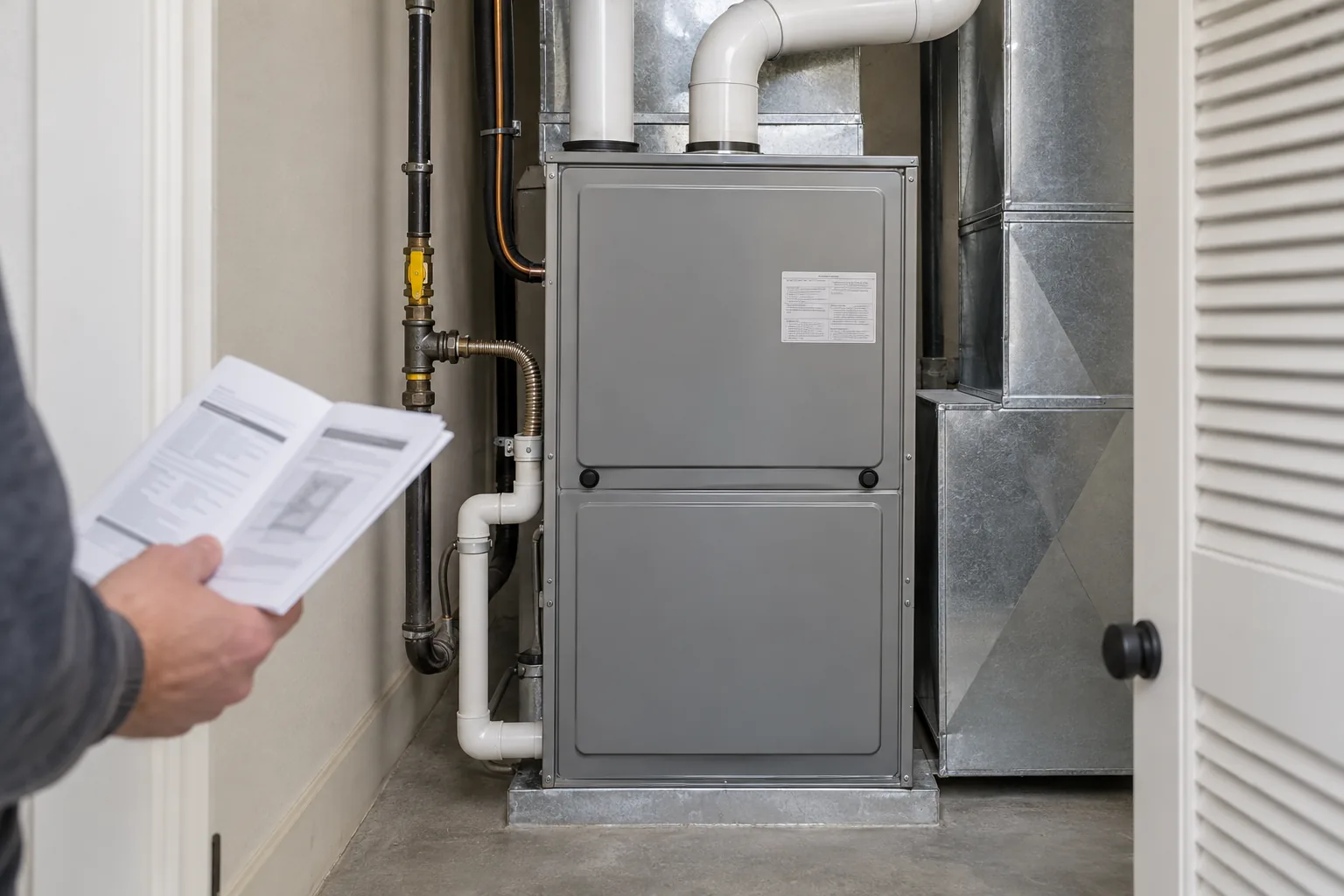
Featured image is AI-generated and illustrative; it is not an installation diagram or a photo of your equipment.


