Should I Turn My Mini Split Off at Night?
Usually, leave a mini-split heat pump maintaining a comfortable temperature when you need overnight heating. In cooling mode, a modest temperature adjustment or the manufacturer’s sleep setting may suit you better. Switching it off can make sense when the room needs no conditioning and will stay comfortable, but there is no universal cheapest setting.
For San Angelo homes, the useful distinction is heating versus cooling, not simply on versus off. The right overnight choice depends on the equipment, weather, room use and comfort needs. Here is a practical way to decide without treating every mini-split as the same system.
A quick nighttime decision guide
| Your situation | A reasonable starting point |
|---|---|
| The bedroom needs overnight heating | Maintain a comfortable heat setting; avoid a large setback unless the manufacturer recommends it. |
| The bedroom needs cooling | Use a comfortable cooling setpoint or suitable sleep setting. |
| Mild weather; the room stays comfortable without conditioning | Turning the unit off with its normal controller may be reasonable. |
| You are away for an extended period | Follow model-specific away guidance while protecting occupants, pets, moisture-sensitive items and pipes. |
| The unit is leaking, showing errors or losing performance | Investigate the fault instead of repeatedly changing schedules. |
Why heating and cooling deserve different answers
In heating mode, start with steady comfort
ENERGY STAR recommends a steady comfortable temperature for heat pumps rather than repeatedly turning them down when asleep. This is a useful starting point for a mini-split providing bedroom heat. A deep overnight setback can also leave you waiting for the room to recover in the morning.
That is guidance, not a promise about every house or utility plan. Follow the equipment manual and consider the room’s temperature, insulation and any backup heating. ENERGY STAR’s ductless-system guidance also covers mode selection and routine filter care.
In cooling mode, use the room’s actual needs
There is no benefit in keeping an unused room colder than needed. A somewhat warmer overnight cooling setting can be sensible if you remain comfortable. Maryland’s energy agency notes that a higher thermostat setting in heat-pump cooling mode can reduce energy use.
Turning the unit completely off is a different decision. Consider whether the room becomes too warm or humid before morning, and whether it contains people or pets needing temperature control. A mild evening alone does not establish what conditions will be overnight. Avoid allowing unsafe indoor temperatures just to test a bill-saving idea.
Sleep mode, Auto mode and Auto fan are different
Sleep mode may gradually adjust temperature, reduce fan speed or change display lighting, depending on the manufacturer. Read your model’s explanation instead of assuming the button has one standard function. Use the normal controller or approved app to schedule operation; avoid daily shutdowns at the electrical breaker.
Automatic heat/cool mode can switch between heating and cooling as conditions change. Auto fan controls fan speed. They are not the same setting. Efficiency Maine’s heat-pump operating tips recommend choosing the needed season mode and using appropriate fan settings.
Does a mini-split need to turn off when it reaches temperature?
Not necessarily. Variable-speed inverter equipment can reduce compressor output as demand falls. Some systems may stop the compressor while an indoor fan continues. Others cycle under light loads. The exact behavior depends on the model and controls, so a running indoor fan is not proof of a fault.
The Building America Solution Center explains how inverter mini-splits adjust compressor speed. Frequent abrupt starts and stops, declining comfort or new error messages are more useful reasons to request assessment than runtime alone.
How to compare two overnight settings fairly
First choose a safe, comfortable baseline. Note mode, setpoint, fan setting, occupied rooms and outside conditions. If your equipment supports it, compare a modest adjustment on nights with similar weather and occupancy. Change one setting at a time and record comfort as well as energy use.
Whole-home electricity readings include refrigerators, water heaters and other loads. A single lower bill does not prove the mini-split setting caused it. Do not claim a percentage saving from one night of testing. If the system has reliable energy-monitoring features, use the manual to understand what they actually measure.
When settings are not the real problem
A dirty accessible filter, obstructed airflow or an incorrectly sized or poorly performing system can undermine comfort. Follow the manual for filter cleaning and keep the unit’s airflow path unobstructed. Leave refrigerant, wiring, internal cleaning and fault diagnosis to an appropriate professional.
If heating performance has changed, explore heat-pump service options. If a room addition or garage needs a different solution, review ductless mini-split installation in San Angelo. A sizing and placement discussion is more useful than guessing a larger unit from room area alone.
Frequently asked questions
Can I leave my mini-split on all the time?
It can remain enabled when conditioning is needed, following manufacturer instructions. “On” does not mean the compressor must run at full power continuously. You still need a suitable setpoint and regular care.
When should I turn my mini-split off?
When the room needs no heating or cooling and remains safe and comfortable without it, normal controller shutdown may be reasonable. Longer absences and cold-weather protection need model-specific planning.
Why is my electric bill high with mini-splits?
Review weather, setpoints, hours of use and the rest of the home’s electrical loads. If comfort has declined or faults appear, request an assessment rather than assuming a different sleep schedule will solve it.
What is the most efficient way to run a mini-split air conditioner?
Use a suitable mode and comfortable setpoint, maintain clear airflow and follow the model’s filter and controller guidance. The lowest-energy plan depends on your room, usage and conditions.
Need help with room comfort?
Call 877-651-9143 to request HVAC service in San Angelo. Share the model, settings and symptoms, and confirm provider details, fees and availability before booking. Explore the full heating and cooling service guide for related needs.
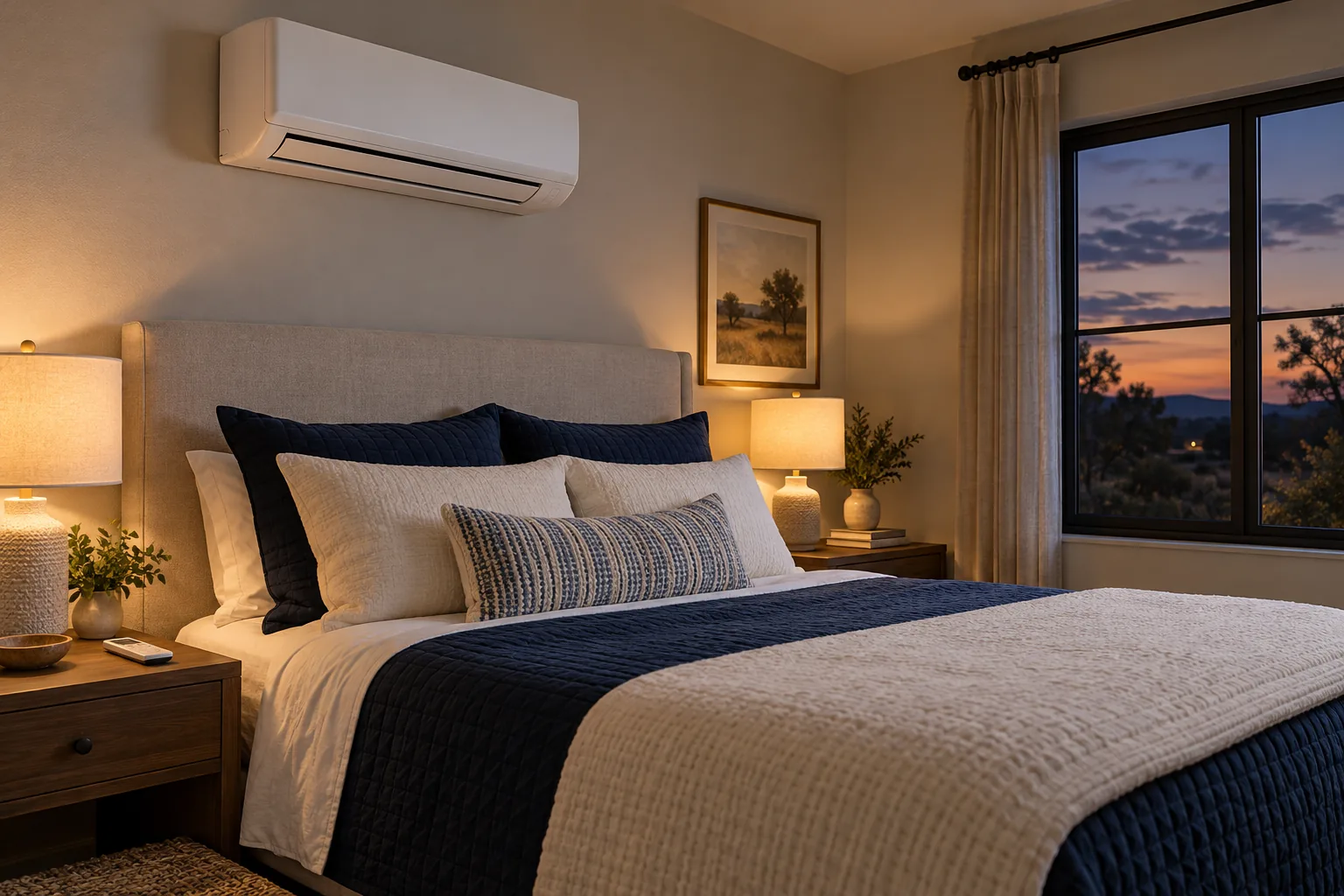
AI-generated featured image used for illustration. Follow the instructions for your exact equipment and controls.


